Showing posts with label amazon. Show all posts

Saturday, August 19, 2017

Rejected for Reviewing


I am a professional reviewer, having worked for AuthorLink for nearly 10 years, and a consumer reviewer since nothing is purchased without someone emailing to know what I thought of their product, service, or opinions. I have reviewed several books for NetGalley over the years and haven denied access to books to read and review, but this is the first time I have been rejected and specifically asked to apply for access again. No such option is available to me on the NetGalley website. The FAQs mentioned that I could request the book from the publisher, which I have just done, but I thought I'd put my opinions out in the world for everyone to read, learn, or comment about. Why not? Is this world not a connected world where all opinions are debated, denied, calumnized, and laughed at by everyone? I might just get my wish to read an advance copy on my Kindle reader to see whether or not I will enjoy The Rules of Magic as much as I enjoyed Practical Magic or the numerous other books I have read by Alice Hoffman, even books I didn't think I would like and discovered I thoroughly enjoyed.

Hoffman is a consistently good author and her subject matter of practical magic for the characters in her books is endlessly fascinating without the over hyped sexual aspect of paranormal books and authors dabbling in the paranormal genre over the past few decades. In spite of my personal views of PDAs and the avoidance thereof, Hoffman does not go that route with her books or her characters and I do like that.

Simon and Schuster is one of the Big Six Publishers that many indie and Big-6 published writers deal with when they decide to enter the publishing world, but I will have to wait until some unknown publicist for this book here in the USA decide to read and respond to my query regarding an advance copy. Until then, I will continue to plan on reading the book when it is published in October or contact one of my contacts to do me a favor. Either way, I will of course get the book, read it, and review it here or wherever (Amazon, Good Reads, newspapers, magazines, or here on my own blog) and whenever I may. That's life and the way the pages fall.

This rejection is not the end and I still have other authors to fill my time in the meantime and beyond until this 3rd density existence is either upgrade by the Cosmic Sneeze or the Grim Reaper comes for me at length.

I wonder. Will I be able to read books -- or care about them -- when I have ascended?

That is all. Disperse.

Friday, March 11, 2016

Review: Saving the Ellcrys


Have you seen the Shannara Chronicles from MTV? I am on my second watching and one thing still bothers me. If the tree knew she was dying since Amberle was born and the race to be Chosen is run every year, why didn't the tree contact Amberle a year before or let Amberle know when she touched the tree as she entered puberty (or whenever) that the Ellcrys was dying and the Forbidding would end as she died? Of course, The Elfstones of Shannara would probably not have been written and yet it seems bad planning for the sake of creating an adventure pretty slim to rely on someone getting to Safehold to bring the Ellcrys seed to the Bloodfire and bring it back while the tree is dying and the demons attacking.

I don't know how far it is from Arborlon to Safehold (San Francisco -- probably the Bay Area Transit System -- but it wouldn't have taken days to get there and back and the tree dying so suddenly without warning was not the best plot. Time is a funny thing in books and especially in movies and series because there is so seldom a mention of how long it takes to get there and back.

I read The Sword of Shannara when it was published, but never delved further into the Shannara series. Instead, I decided to follow The Black Unicorn and dip my toes briefly in Terry Brook's other books and then moved on to other authors and genres and stories that appealed to me more. It has nothing to do with Brooks's writing -- or maybe it did and I didn't realize it at the time. I do remember thinking that the book ended on a somewhat sour note and maybe that is why I didn't follow Brooks's other Shannara books. Or maybe it was because the books didn't come out quickly enough. I doubt that last reason because I have followed George R. R. Martin's Ice and Fire Saga in spite of his delay in publishing the final book of the saga.

My dis-ease may be due to what I saw as flaws in the plot and the finale as I have with the Ellcrys issue in the Shannara Chronicles. I have begun reading The Sword of Shannara again because of the MTV series and still find a sapient tree that has held the demons in the Forbidding for years unable to communicate with the one person born to take their place as the new Ellcrys a bit of a sticking point. I don't mind that the sapient tree with the silver bark and the blood red leaves in the book being turned into an old tree with red leaves and brown bark an issue. How many silver trees with blood red leaves are there in the world? I guess CGI couldn't do the trick or maybe there wasn't enough money in the budget to do a credible job on the screen. Things like that happen all the time. I won't quibble about that.

I won't even quibble about the pronunciation of Allanon's name, even though it sounds like Al-ANON, the Alcoholics Anonymous group for friends and family of alcoholics, instead of ALL-anon, like all anon -- all in good time or all soon. That may be just a personal preference and Brooks instructed the actors and director how to pronounce the druid's name. I don't even mind that Manu Bennett is nowhere near 7 feet tall as the Allanon in the books is. These are tiny gnats compared to the glaring plot hole that is the dying Ellcrys.

At any rate, I do find the series interesting and the relationship between Wil and Amberle and Eretria (another pronunciation quibble for me) interesting enough to keep my attention, though I feel the 10-episode series rushed and a bit slap-dash. The chemistry between the characters/actors is fairly realistic and mostly works. Allanon is not quite as forbidding and close-mouthed as I imagined him, but c'est la vie.

I'd give The Shannara Chronicles a B- overall and look forward to finding out what happens to Amberle, Wil, Eretria, and Bandon -- and even Allanon -- in the next season. I hope for more than 10 episodes, but I'd prefer a 10-episode season to a 22-episode season with huge gaps in the season something I see as devolving from the Lost producers. What happened to the 26-episode season that has a short break between Thanksgiving and New Year's? Just give me the season and let's move on.

I much prefer the way Netflix does their shows: upload the whole series and let users watch the show at their own pace. Even if that pace is all at once in a binge or 3 or 4 times before the next season is uploaded. I can watch the series when they come out or wait a few months until I feel the spirit move me to dig in and watch.

The 12- to 13-episode season is also perfectly fine, especially if the show is like Downton Abbey. The show is nearly a full 60 minutes long and each episode feels timeless, more like a couple of hours. The show flows at a good pace and each nearly hour-long episode is full of drama of all shades. I am a little sad the series ended at Xmas for the UK and has just ended here in the States because it is a classy, well written show full of fascinating characters and talented actors. One could not ask for more . . .  unless it is more of the same for the foreseeable future, like for the next 20 or so years. Downton Abbey never gets old and never disappoints -- except when Matthew Crawley suddenly died on the day his son is born, but I was willing to forgive and forget.

I suppose since I began with The Shannara Chronicles I should end with that.

I am a bit disappointed in the premise of the story and the lack of episodes, but overall I have decided I will continue to follow the series -- if more are made. I'll reserve final judgment for when I've read the book and watched more of the continuing adventures of Wil Ohmsford and Eretria the Rover Girl. I wonder if Cephelo will find a way to avert his death -- again. That would be interesting as well.

Oh, a couple more things. Wil isn't half elf. He is a quarter elf. His father, Shea, was half elf and his mother was all human. Therefore, half of a half is a quarter. Unless his mother had elf blood too (probably not since her ears weren't pointed) and then he'd be still less than half, depending on how much elf blood his mother had. Each generation with each mating of a human would diminish the elf blood so any children Wil had would also be less than half and would in fact be an eighth and their children would be a sixteenth and so on and so on. How much of a mongrel is obviously not the general issue since anyone with Shannara blood would be able to wield the elfstones and any other Shannara magic, but I would imagine that such magic and control would be limited by the amount of Shannara blood running through their veins.

Why didn't Wil call Perk and his Roc instead of taking the trolls' horses? Flying would get them back to Arborlon quicker and they wouldn't have to rely on horses that cannot cross the mountains or need to be fed and rested before continuing. I know it seems like Wil and Amberle mounted the horses and rode a few hours to get to Arborlon on time, but that would mean the trip to Safe Hold/Safehold need not have taken so long or taken the lives of so many elves in the process. There would be no need to go to Pykon or go through the Wilderun. They could've just ridden along the shore and through the woods to Safehold/Safe Hold. I'd call that a big plot hole. Wouldn't you?

Then again, Shannara blood could be a recessive that would not be apparent in every generation, rather the way that blood from other races after so many generations would be either recessive or dominant and yet still not half or full blood. It's a genetic thing and genetic things can be a bit tricky. Just ask a quadroon or octoroon or Commander Spock. Will can only conquer so much. It's not a matter of passing but a matter of magic and belief which is the heart of magic.

That is all. Disperse.

Tuesday, October 20, 2015

Paper versus Electronic Books


I've been reading -- really scanning -- articles about how paper books are better than the Kindle. One researcher did add reading on an iPhone but I got the sense that it was a trick to throw off the track.

What it comes down to is new technology versus old technology.

Books have been around in paper form for a few centuries. Before that books were printed on vellum/parchment which consists of the cleaned and scraped and tanned skin of lambs. Each book was hand printed and the designs painted directly on the skin and were the property of the church, especially in the Middle Ages, and of only the wealthy. Publishing has gone through many different phases since the lambskin days and the advent of printing the Bible on cheap paper so that the average man and woman could read, which was the initial reason behind the Latin Vulgate Bible (vulgate from the Latin word meaning vulgar or common).

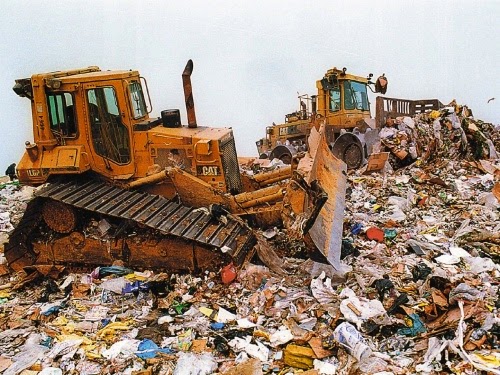
Books before the 20th century were printed on cotton, rags to be precise, and rag pickers delivered much of the rags used to make books. Books printed on cotton paper have lasted for centuries, but not so books printed on pulp paper (hence the whole pulp fiction genre) which contains a high level of acid and crumble within a few years -- usually about 5 years of continuous use, and often less time. Pulp paper is cheaper to make and also cheaper to throw away as evidenced by the millions of tons of paper books that are thrown into landfills. That is pure waste. Those books are published by traditional publishers by the millions and most end up as the base for new land, new home developments, and reclamation projects that are built on the billions of tons of trash generated every day. Even in the dawn of the 20th century, publishers that actually printed high quality, rag content books were being bludgeoned into submission and out of business by the pulp paper publishers. After all, who really wants to pay a high price for a book printed on rag paper when they can get cheap books printed on paper pulp that must be purchased again when the old ones wear out?

Now comes the advent of electronic books, e-books, and the need for precious resources like cotton and rags and pulp paper declines -- and so does the need for big publishing houses churning out billions of paper books. Why buy a book that will be destroyed or succumb to the ravages of time and need to be replaced when electronic books are available that use so few resources and are cheap? And if those e-books are put out by a specific retailer that has managed to make a fortune manufacturing better and cheaper tools to read those ebooks what does that leave for the traditional publishers to do but give in to the retailer and cut their profit margin?

What we have here is a battle between pulp paper book publishers and Amazon and all the stops are being pulled out to destroy Amazon, or at least reduce it to a point where the publishers can retain their royalties and their market share. Ebooks will end their reign of prosperity and watch dog status over who does and who does not get published.

Some of the studies I've read have no double-blind or control group phases and seem to be based on pseudoscience rather than hard science that relies on facts and figures and repeatable experiments with hard data. Most people don't realize that publishers also own newspapers and media outlets as well as publish books and they control the flow of information demonizing their opponents in order to achieve their objectives -- more profits and control of the flow of information -- and books.

I will not fisk every single one of the articles I read, but I will say this: reading an ebook on a computer or tablet or cellular phone is not the same as reading on a Kindle. Those other devices have access to the Internet and usually notify the user that email or RSS feeds are available, pulling the reader away from the book currently on the screen. Such devices do not help the reader maintain their focus or their attention; there is too much else going on at the same time. A paper book has no bells or whistles and only the print on the page. When one sits down to read from a book one is going to be stuck there -- as long as the TV is not on and the myriad cable channels just a wrist flick away on the remote. No one mentions those facts.

I did see one article mention that the resources used in creating the Kindle are toxic and cannot be recycled so plowing them into the landfill might cause serious consequences down the line, but so do cars and geo-engineering and contrails filling our atmosphere with heavy metals in order to control the climate, but no one mentions those either.

The solution to toxic materials is to make Kindles and other e-book readers out of sustainable materials that can be recycled or trashed in a landfill. I have not yet seen any claims by publishers that dumping millions of tons of paper books every single year into landfills has been stopped or the renewable resources that went into creation of those books being recycled or renewably sustained in another form -- outside of folding the pages and turning the unwanted, unread books into doorstops after they are suitable painted. Publishers also have offered no move back to rag paper or paper from hemp, both of which have a much longer shelf life and are less acidic than pulp paper books. What they haven't said is as loud as a scream of horror during a moment of silence -- and just as memorable.

If there is less attention to reading and more of a Mayfly attitude while reading an e-book on a device, blame the Internet and the millions of other things vying for the reader's attention and not the device, especially when the paper white technology pioneered by Amazon.com has been proven to be as easy on the eyes as a book on paper. The other features of the e-book are easily learned and e-books are a fairly recent technological breakthrough and need time for people to fully adapt.

If Norwegian high schoolers have trouble remember what comes next and cannot adequately discuss the plot points and characters of the novel or essay they are being given to read, I'd consider conducting the same experiment over a larger age range of the population with the same material and with different reading devices before claiming categorically that e-books provide no information and e-readers get less from the device than from the paper book without also examining the mind set, the behavior, and the tools used for the study. In short, a really scientific approach with double-blind and control group studies should be used and the bias left outside the testing facility.

There is room for both paper and electronic books and benefits can be had equally from both. 

That is all. Disperse.

Saturday, August 09, 2014

The Future of Books in a Green World

Did you know that 40% of all books printed in the United States are destroyed each year? That means of the 15,000,000 (15 million) books printed in 2012, 6,000,000 (6 million) books were destroyed. They are put into landfills and your new house in that new suburb may be sitting on top of all pulped books, books that were printed and sent to retailers who then sent the books back to the publishers' warehouse to be remainder for a short time and eventually destroyed, bulldozed into landfills among garbage and detritus. That is the past, present, and future of all the trees that were cut down and pulped to make the books that were not sold.

Recyclers say they cannot recycle books because of the glue that binds books together along the spine. They have neither the technology nor the equipment to separate glue from paper so the paper can be recycled. I'm going to have to cry foul on that because it would take very little effort to slice off the spine and pulp the rest. I could do it with a paper cutter, but it would be a slow process, and yet I'm certain that a forward thinking recycler could invent or build a machine to slice off the glued spine to recycle the paper and make a whole lot of profit. It's common sense.

I worked in a company a long time ago where I stripped the covers from paperbacks which were then sent back to publishers for credit and the rest of the book was sent to be destroyed. At that time, the books were either fed into the furnace to keep us warm during the winter or later sent to landfills to be bulldozed into the trash that eventually became a new plot of land on which to build hospitals, houses, and businesses. It still seems wrong to me, but I grew up in a land just 10 years post World War II and book burning just did not settle well with me. Nor does building land on top of destroyed books. Don't believe that your green plans for recycling and repurposing books will end up in any other way but the landfill. Only the rare books end up in a dusty shop on the shelves of towering bookcases with little stick-on tags with expensive prices. Few books ever reach that level. Most end up on the dollar and 50-cent table outside some run down bookshop just before they too are sent to the landfill. This cannot be the future I envision and still hope to see. 

In this green conscious age in which we live, I see that as unconscionable, especially when there is an alternative that doesn't waste trees, paper, ink, and books. We all know what it is -- digital books, e-books, The Future.

I received this email this morning from Kindle because many of my books are on KDP. Take the time to read it and then ask yourself this question: When all is said and done, who cares about readers?

Dear KDP Author,

Just ahead of World War II, there was a radical invention that shook the foundations of book publishing. It was the paperback book. This was a time when movie tickets cost 10 or 20 cents, and books cost $2.50. The new paperback cost 25 cents – it was ten times cheaper. Readers loved the paperback and millions of copies were sold in just the first year.

With it being so inexpensive and with so many more people able to afford to buy and read books, you would think the literary establishment of the day would have celebrated the invention of the paperback, yes? Nope. Instead, they dug in and circled the wagons. They believed low cost paperbacks would destroy literary culture and harm the industry (not to mention their own bank accounts). Many bookstores refused to stock them, and the early paperback publishers had to use unconventional methods of distribution – places like newsstands and drugstores. The famous author George Orwell came out publicly and said about the new paperback format, if “publishers had any sense, they would combine against them and suppress them.” Yes, George Orwell was suggesting collusion.

Well… history doesn’t repeat itself, but it does rhyme.

Fast forward to today, and it’s the e-book’s turn to be opposed by the literary establishment. Amazon and Hachette – a big US publisher and part of a $10 billion media conglomerate – are in the middle of a business dispute about e-books. We want lower e-book prices. Hachette does not. Many e-books are being released at $14.99 and even $19.99. That is unjustifiably high for an e-book. With an e-book, there’s no printing, no over-printing, no need to forecast, no returns, no lost sales due to out of stock, no warehousing costs, no transportation costs, and there is no secondary market – e-books cannot be resold as used books. E-books can and should be less expensive.

Perhaps channeling Orwell’s decades old suggestion, Hachette has already been caught illegally colluding with its competitors to raise e-book prices. So far those parties have paid $166 million in penalties and restitution. Colluding with its competitors to raise prices wasn’t only illegal, it was also highly disrespectful to Hachette’s readers.

The fact is many established incumbents in the industry have taken the position that lower e-book prices will “devalue books” and hurt “Arts and Letters.” They’re wrong. Just as paperbacks did not destroy book culture despite being ten times cheaper, neither will e-books. On the contrary, paperbacks ended up rejuvenating the book industry and making it stronger. The same will happen with e-books.

Many inside the echo-chamber of the industry often draw the box too small. They think books only compete against books. But in reality, books compete against mobile games, television, movies, Facebook, blogs, free news sites and more. If we want a healthy reading culture, we have to work hard to be sure books actually are competitive against these other media types, and a big part of that is working hard to make books less expensive.

Moreover, e-books are highly price elastic. This means that when the price goes down, customers buy much more. We've quantified the price elasticity of e-books from repeated measurements across many titles. For every copy an e-book would sell at $14.99, it would sell 1.74 copies if priced at $9.99. So, for example, if customers would buy 100,000 copies of a particular e-book at $14.99, then customers would buy 174,000 copies of that same e-book at $9.99. Total revenue at $14.99 would be $1,499,000. Total revenue at $9.99 is $1,738,000. The important thing to note here is that the lower price is good for all parties involved: the customer is paying 33% less and the author is getting a royalty check 16% larger and being read by an audience that’s 74% larger. The pie is simply bigger.

But when a thing has been done a certain way for a long time, resisting change can be a reflexive instinct, and the powerful interests of the status quo are hard to move. It was never in George Orwell’s interest to suppress paperback books – he was wrong about that.

And despite what some would have you believe, authors are not united on this issue. When the Authors Guild recently wrote on this, they titled their post: “Amazon-Hachette Debate Yields Diverse Opinions Among Authors” (the comments to this post are worth a read).  A petition started by another group of authors and aimed at Hachette, titled “Stop Fighting Low Prices and Fair Wages,” garnered over 7,600 signatures.  And there are myriad articles and posts, by authors and readers alike, supporting us in our effort to keep prices low and build a healthy reading culture. Author David Gaughran’s recent interview is another piece worth reading.

We recognize that writers reasonably want to be left out of a dispute between large companies. Some have suggested that we “just talk.” We tried that. Hachette spent three months stonewalling and only grudgingly began to even acknowledge our concerns when we took action to reduce sales of their titles in our store. Since then Amazon has made three separate offers to Hachette to take authors out of the middle. We first suggested that we (Amazon and Hachette) jointly make author royalties whole during the term of the dispute. Then we suggested that authors receive 100% of all sales of their titles until this dispute is resolved. Then we suggested that we would return to normal business operations if Amazon and Hachette’s normal share of revenue went to a literacy charity. But Hachette, and their parent company Lagardere, have quickly and repeatedly dismissed these offers even though e-books represent 1% of their revenues and they could easily agree to do so. They believe they get leverage from keeping their authors in the middle.

We will never give up our fight for reasonable e-book prices. We know making books more affordable is good for book culture. We’d like your help. Please email Hachette and copy us.

Hachette CEO, Michael Pietsch: Michael.Pietsch@hbgusa.com

Copy us at: readers-united@amazon.com

Please consider including these points:

-          We have noted your illegal collusion. Please stop working so hard to overcharge for ebooks. They can and should be less expensive.
-          Lowering e-book prices will help – not hurt – the reading culture, just like paperbacks did.
-          Stop using your authors as leverage and accept one of Amazon’s offers to take them out of the middle.
-          Especially if you’re an author yourself: Remind them that authors are not united on this issue.

Thanks for your support.

The Amazon Books Team

P.S. You can also find this letter at www.readersunited.com

Tuesday, June 17, 2014

Fox Books and The Shop Around the Corner

The debate between independent and traditional publishing authors is heating up and now bookstores have been added to the discussion. If Hachette does not get its way with Amazon, then bookstores will suffer. Bookstores will become extinct and books will no longer be available through the friendly neighborhood bookstore. It's like the underlying theme of You've Got Mail with Meg Ryan and Tom Hanks.

The 3rd generation owner of Fox Books, Joe Fox, sells books, lots of books, at low, low prices, much like Amazon. The Shop Around the Corner, owned by Kathleen Kelly, the daughter of the original bookstore owner, sells children's books at a much higher price, buying them from publishers at about 50% wholesale, which means she must sell the books at a much higher price than Fox Books. It's all about volume sales.

Kathleen Kelly also hosts authors for signings and reads books to children. It is part of the service she provides as the bookstore owner. She decorates her windows with books and photos of children's book authors and sells rare and expensive hand tipped books, packing everything in canvas book bags for customers. The Shop Around the Corner is a boutique business in the old world tradition.

Joe Fox sells millions, perhaps billions of books, and sells all the books at deeply discounted prices. He can afford to sell books cheaper than Kathleen Kelly because he has the space to buy more books and get a better deal on price than The Shop Around the Corner. "It's business. It's not personal," as Joe tells Kathleen as they battle for supremacy.

The audience groans when Fox Books puts another bookstore out of business, a mystery bookstore, and they cheer when Kathleen appears on TV to fight the good fight to protect her little children's book shop. Meanwhile, Joe Fox touts his deep and comfortable chairs, food, and lattes and the way readers can come and sit for hours and just read and relax.

In the real world, Barnes & Noble is Fox Books and boutique neighborhood bookstores were put out of business by Barnes & Noble because B&N could afford to sell books cheaper and they offered scones and lattes and comfortable chairs where book buyers could sit and relax and read and write or do whatever. B&N also hosted authors for readings and signings and even sold records, cassettes, and games, as well as iPods and tape players. B&N was the future of bookstores while neighborhood book stores unable to get deeply discounted prices for published books fought for space and sales.

The thing is that no one seems to remember that the death of the neighborhood and privately owned bookstore was touted when Barnes & Noble and Borders and Books-a-Million and Half Price Books and other discount bookstores came onto the scene and drove independent bookstores out of business.

Then along comes Amazon and a brand new technology - eBooks and Kindle. B&N and Borders were no longer the flavor of the month. They had been replaced by a virtual store that sold books at deeper discounts than B&N offered and Amazon quickly took the book buying world by storm. B&N and Borders liked that they could keep a book for years and send it back to the publisher worn, torn, and shelf scarred and get a full refund. That was a deal born of the Great Depression when publishers were motivated to keep bookstores in business, a model that has not changed and one that nearly cost publishers -- and eventually authors who had to give back royalties -- a bundle in October 2008. It was a bad time and an even worse one for authors who were hard hit by returning their royalties and not getting royalty checks when bookstores, like B&N and Borders, returned all those books, books that went directly to the landfills.

Life is about change -- and so is business. Either move with the times and innovate or be buried in the dust. That is what bookstores and authors and publishers and readers need to keep uppermost in mind.

As much as we all rail about this changing world and so many of us comfortable with the past want it to stay unchanged, that is not the way the world works, especially not when it comes to retail. In order for business to be viable it must make money. That is the bottom line.

It is also a bottom line that Barnes & Noble, Borders, and numerous privately owned bookstores do not seem to grasp. Amazon is not the enemy any more than Joe Fox was. It's business. It's not personal.

Except that it is personal to Hachette. Hachette still allows bookstores to buy books and return them for full refund even though the books have been on the shelves unbought and pawed over by untold numbers of potential book buyers. Hachette doesn't mind when books are dumped by the millions into landfills. It's a tax write-off they are more than happy to take at the end of the year, and they don't have to pay authors anything because the books were never sold. The perk there for Hachette and the Big-5 publishers is that even though the books were never sold, the numbers remain so their big name authors remain on the best sellers lists. It's all about numbers, just not numbers that include Amazon being able to dictate terms to PUBLISHERS.

Amazon just will not accept its place in the scheme of things. Hachette has been doing business in publishing for decades and upstart Amazon refuses to grasp that they are supposed to be grateful for being allowed to put Hachette authors on their virtual bookshelves. The nerve!

If bookstores want to stay in business, it is time to change the way they do business the way they did in the 1800s or even the 1980s and get move with the times. Sell books. Sell expensive books to make your profit, but diversify and seize the moment to look at business -- and life -- in a different context.

Kathleen Kelly closed her bookstore because she couldn't compete with Fox Books, but she found other options. Publishers asked her to write her own children's books. Some offered her a great salary to work for them as an editor. Opportunities opened up that were never possible as long as she clung to the past and memories of working in the bookstore with her mother when she was a child, memories that included growing up and becoming the new owner of The Shop Around the Corner. It was difficult saying goodbye to the past, but Kathleen Kelly embraced her new future.

Privately owned bookstores and chain bookstores still stuck with their original innovations now dusty and dated refuse to embrace the future, to look at the world from a different perspective.

We all hold fond memories of the businesses and, for me, the bookstores that were a bright part of our lives, but it is nearly impossible to give up $60 for a couple of books, no matter how beautifully hand tipped and First Edition rare, when that same $60 will buy me 6 or 10 or even 20 books just waiting to be opened, read, and explored -- and loved. In the end, it is all about numbers. More is better, especially when it comes to books, be they print or eBooks, thousands of which I can archive or put on the Kindle I take with me wherever I go. I love the convenience and format all my books in eBook form first, and I never have to worry about them being returned and buried in a landfill.

I still go to bookstores that provide a calm and quiet place to relax and read (sometimes on my Kindle), write in my journal, sip lemonade or tea, and eat a cranberry orange muffin on a lazy Saturday or Sunday afternoon. It's the best of both worlds and I look forward to the next innovation in publishing, which I hope will put the Big-5 publishers in their places and open up a world of possibilities.

Sunday, June 15, 2014

Waht Hachette is Up to.

I'll keep this short and simple.

In a blog post by Hugh Howey, the data is clear. Hachette is ripping off authors and is fighting Amazon to continue to do so. Read it and weep.

So, Hachette authors in the midlist, how do you feel about that?

Michael J. Sullivan breaks it down so everyone gets the point. 


Thursday, June 05, 2014

The Wind From One Door Closing...

Since the negotiations between Amazon and Hachette have made the news with authors chiming in on both sides, the old Chinese curse has become a reality. We do indeed live in interesting times.

We also live in times that are lagging far behind the 21st century and the technological age. The Big-5 publishers, Hachette, included are working with the old publishing model, even though these media conglomerates have gobbled up every major publisher, and have become mega-corporations with tens of billions of dollars in business and profit every year. Though they claim to be preserving the future of publishing so there will always be books, it's rather like a member of the 1% claiming to understand what it is like for the middle and lower classes of people getting by from paycheck to paycheck and wanting enough disposable income to buy the books they want. In short, that dog won't hunt.

In easier to understand words, the 1% does not have a clue.

Make no mistake, Hachette and the other members of the Big-5 belong to the 1%, as Barry Eisler writes in The Guardian. As Eisler states, "[The Big-5] have done all they can to try to keep the prices of books artificially high, which hurts consumers and costs authors money. They have a record of zero innovation. And they've run the industry for decades in a way that has benefited the few while stifling new opportunities for the many."

James Patterson, multi-million dollar author and employer of a cadre of writers to help churn out 13 books a year, has bought some pretty expensive ads to brand Amazon the bad guy. Did I mention Patterson is a Hachette author? No smoking gun there.

Patterson decries the loss of Mom and Pop bookstores when he should, as Eisler put it, "...reconsider their anti-Amazon ideology, which at root is an attempt to stop the evolution of publishing itself. Because indie authors are the mom-and-pop shops of publishing. And the 1 percent's war on Amazon risks turning us into collateral damage."

Despite this war on Amazon and Hachette claiming to the victim of Amazon's bullying (at least as seen by author, John Greene ), a great opportunity is being lost. This is the 21st century and we live in an age of technological marvels with the life span of a mayfly. In order to compete and stay in business, bookstores need to move with the times, do what Amazon has done, and remodel their businesses. It's time to stop relying on returning thousands of books for full refunds, as they have since the Great Depression when publishers needed to keep bookstores open to sell books, and find a new path through the wilderness. One thing bookstores can be certain of is that books are not going away any time soon.

Amazon puts the customer first and that is what has taken Jeff Bezos's business from his parents' garage into a billion dollars international business. Bezos saw the future and he used technology to create a new business model, one that Hachette and the rest of the Big-5 want to dismantle.

Small bookstores should ask what customers need and want and make that happen. One bookstore turned an old mansion into a haven for customers with niches and nooks and comfortable spots to kick back, relax, and read. They made their store a comfortable place to enjoy a book for an hour or three. It's a step in the right direction, but doesn't go far enough.

How about charging stations for cell phones, tablets, eReaders, and laptops? Charge a small fee for the convenience.

Download stations for eBooks would be a good idea. No charge, just a secure line to do business from whatever store the customer chooses. The customer will repay the owners by spending more time in the store and end up buying books. Owners could also get a license to offer eBooks on every platform available for reading eBooks and offer accessories, skins, and trade-ins (or trade-ups) for all devices. Give customers a sample of whatever book they're considering or bundle print and eBook at a good price. The technology is available, so why not move with the times?

There are machines that print books in minutes, so why not buy a few and offer to print a customer's book in the store? The Espresso Book Machine would be perfect for that, and there are machines from other companies so you can shop price and availability.

Why not have a repair shop for laptops, tablets, and eReaders? Carry the parts and make repairs while the customers waits -- and reads. Another option would be to offer a loaner while their machine is being repaired. Think outside the box.

Host author evenings and round tables. Be THE place to go to discuss books and genres with published authors, beginning with local authors. Be a favored spot on a book tour. Offer classes in writing and editing for hopefuls and provide a comfortable setting for meetings. Start a book club or host other book clubs at the store. The possibilities are endless.

Instead of hanging signs predicting the Death of Books or the End of Books, strike out into the future with a new plan and forge a future in the ever changing print and digital world. The end is not near unless you have no vision and want to, like Hachette, blame Amazon for all your troubles. Closing one door doesn't mean being stuck in limbo or dying a slow and painful death. Another door will open, but one has to have the vision and guts to make a new door.

Let the world choose sides while Hachette and the rest of the Big-5 pretend to be victims of Amazon's innovation and forward thinking, but make a future that is all yours. It sounds like such a great idea, I may find some like-minded people and buy a bookstore going out of business to start my own. The future is here now. Be a part of it, change with the times, but don't complain if you get run over standing goggle-eyed while the train hits you. You've no one to blame but yourself.

Wednesday, June 04, 2014

Defining Bully

As negotiations between Hachette and Amazon heat up, writers have taken up the gauntlet on both sides and battle it out on in cyberspace and in print. Notable Hatchette authors (James Patterson, Scott Turow, and Nina Laden. Many Hachette authors and other interested parties from the Big-5 have labeled Amazon a bully. For writers and people with a good command of the English language, it seems they don't understand the definition of bully.

Merriam Webster defines a bully as a blustering browbeating person; especially :  one habitually cruel to others who are weaker; a hired ruffian.

Amazon does not fit the definition. Hachette is one fact of a 200-year-old mega-corporation. That would be the stronger of the two parties. One could say that Amazon has clout when it comes to book distribution, but there are other distributors, like Barnes & Noble.

Independent bookstores are also suitable venues for books, especially of the ink and paper type, and Hachette could continue doing business with those smaller distributors as they have since the Great Depression with the same contract that allows bookstores to return books months, even years after they were shipped. Doing business in the same old manner (fixing prices, 90% returns, and draconian contracts with authors) is what Hachette is doing its best to protect as it take the vanguard in the war between the Big-5 and Amazon.

Amazon does have clout, but Jeff Bezos continues to do business the way successful retailers always do business - by putting the customer first. Some books have been showing up at Amazon stores that formerly had their pre-order buttons removed, but that move was store policy when delivery of an item cannot be guaranteed. Once again, Hachette comes out the bully in that scenario since delaying shipments to force Amazon to knuckle under isn't working quite as well as they had hoped.

The Department of Justice has ordered Amazon and Hachette not to discuss negotiations until an accord has been reached. Amazon has kept mum and, on the surface, so has Hachette, except that no one muzzled the PR department at Hachette which is busily demonizing Amazon in the press and in letters to their authors to force Amazon to heel. Once again, Hachette looks the bully. Remember the definition: blustering, browbeating, habitually cruel to others who are weaker, hired ruffian. There is no doubt the employees in the PR department at Hachette and the Big-5 are earning their salaries with glee and laughing all the way to the bank. Demonizing the opponent is always such fun.

I tell people that when a discussion or debate descends to the point where one of the participants criticizes the opponents, slings mud, and begins calling names, that person is on the ropes and losing. Since I have yet to see anything from Amazon or Jeff Bezos while Hachette supporters and the PR department churns out claims of Amazon bullying the Big-5, I'd say that once again Hachette is doing the bullying.

What people seem to forget (one of the many instances) is that the money to fight and demonize Amazon comes from people buying books written by authors under contract to the Big-5. Authors get a very small piece of the pie unless they are proven international best sellers who have also sold movie rights and whose books are shipped in the millions for readers to buy and download, it would seem far smarter for Hachette and the other members of the Big-5 to pay more money to authors and less to PR departments engaged in mud-slinging. But what do I know? I haven't had a Big-5 publisher pick up any of my novels.

Instead of spouting the party line, it might be in authors' best interests to consider self-publishing or negotiating better contracts with the Big-5 or simply signing up with Amazon to get 70% of the publishing pie and monthly royalty payments where they can track their actual sales instead of being paid twice a year and getting publishing statistics that have been adulterated. After all, isn't 70% of the pie better than 25% for digital and 15% to 20% for print and being paid every month instead of twice a year?

Well, publishers take on more of the risk and can print more books? Publishers have editors and cover artists and all kinds of services that the average author doesn't want to have to deal with? You know what? Those services can be hired out for less than the Hachette and the other Big-5 charge for just being themselves.

PR departments do more than sling mud at Amazon. They also handle marketing and advertising. The funny thing is that the mid-list authors, the publishers' bread and butter writers, get very little of those services. Well, you might say, they don't sell as many books. That's true, but think how many more books those same midlist authors would sell if they got the kind of service that the big names get? And how little a slice of the royalty pie they would continue to get. Marketing and advertising can also be hired out - for less than Hachette and the Big-5 charge as the cost of doing business. Looks like the bully here is pretty obvious. The bully isn't taking lunch money, just the lion's share of the pie and leaving the crumbs to the authors without whom publishers would cease to exist.

Writers have been looking at this publishing thing from the wrong perspective and perspective is everything. It's the difference between seeing your spouse go down on someone else or just picking up the pieces of a broken glass.

All of the services that Hachette or the rest of the Big-5 can be bought for far less than what those same publishers charge and the author retains all the rights. Hachette and the Big-5 have convinced the world (that old PR department working over time again) that they are necessary because they have all the cards, rather like a card sharp stacking the deck when playing a bunch of rubes and marks, and just as lucrative -- for the publishers.

The world is changing, but entrenched publishers aren't changing with it. They spread the word that the end of the book is here and the sky is falling because they're not pulling all the strings while they downsize and use MBAs as editors and continue to suck the marrow out of publishing. What difference does it make if a book sold is digital or print? Digital takes up less space and requires one file sold repeatedly while print books are buried in landfills because bookstores haven't sold them and send them back for a full refund. Where is their ecological conscience? Where is their loving care of the environment as they chop down forests to make books that fall apart in 5 years or less on the shelves or end up in a landfill in New Jersey?

Publishers care about their bottom line, the same bottom line that gives them all the power and the rights while they pay slave wages to authors, negotiating the best deal for themselves and not for the writer. Publishers have no interest in being fair, but they will bully the rest of the world into believing they are the victims here.

They are not victims.

Publishers are parasites that have gotten sleek and fat off the hard work and dreams of others while skimming more of the cream off the top.

Authors need to start caring about the future, not only the future of their bottom line, but the future of books and the world in general. They could revolutionize the business by taking the strings into their own hands and doing business for themselves. Hire out the cover art, editing, marketing, PR and still keep more of the royalties than you're getting with Hachette and the rest of the Big-5 mega-corporation publishers. Sell your books in digital formats and use Print-on-Demand for hard cover and paperback books. Fewer books will be published at the outset, but you won't be stuck with bookstores sending books back for a full refund to be pulped and put into landfills. You can hire a manager or a boutique agency to do the heavy lifting while you write and still get more of the royalties than you are getting now.

Books won't die unless we kill them. Unless we, the writers, stop writing them. Unless we allow Hachette and the rest of the Big-5 bully us into giving up and giving in. The bully wearing the $5000 Italian suit and $6500 Italian shoes with the custom made silk shirts and designer ties and accessories is not on your side while he shares his 3-martini lunches with his confederates. The bully is never on your side.

Can you see who the real bully is now? Bully for you.

Bully when used as an adjective means excellent.

Sunday, June 01, 2014

The Kris Kringle Formula

One of my favorite holiday movies is Miracle on 34th Street and one of my favorite scenes is where Kris Kringle in his lovely Santa Claus suit tells a mother that she can buy what her son wants to find under the tree Christmas morning by going to another store. The mother, played by Thelma Ritter (one of my favorite character actresses), is dumbfounded and says that from now on Macy's will get her business though she has avoided them in the past. Kris's actions are in the true spirit of Christmas and if Macy's will send people to other stores, like Gimbels, then Macy's just won a new customer.

That is a long way of getting into the point of this post, which is about Amazon. Amazon has built their business on giving customers what they want, even when it means offering third party sellers and telling them to go to Barnes & Noble or wherever customers can find what they want and need. The Big-5 publishers don't have the smarts of the Macy's owner who adopts Kris's policy and puts out a big book to show where products Macy's doesn't carry can be found elsewhere. The Big-5 publishers want to keep the lock on sales and distribution and pricing and keep authors from breaking out and going it on their own.

With the rise of boutique and small publishers, the Big-5 publishers began to lose their grip, but when Amazon came out with the Kindle and sales of eBooks went through the roof, the Big-5 claimed that would be the end of paper book sales in hardback and paperback. Except none of that happened. Yes, sales are down from previous years when all the books available were in paper form, but books are still getting out and books are still being read. Business has never been better for small publishers and readers alike. What's not to like about people buying and reading more books even if it is in digital form?

What's not to like is that paper and ink and paperback books with about a 5-year shelf life is not to like when Big-5 publishers have had the monopoly for so many decades -- and centuries. Authors going independent is nothing new nor are vanity publishers, but the likelihood of such authors getting any real fame and fortune out of the process, outside of Mark Twain or Jane Austen and the like, is like playing Roulette. The house always wins, and the Big-5 in their various earlier guises as smaller publishers before being gobbled up by conglomerates and media factories, held house odds. They were the House.

David Gaughran of Let's Get Visible had a lot to say about the Big-5 publishers' PR machine and what isn't being told by the media (owned by Big-5 publishing media services) about Amazon. Hatchette certainly is not going to pat Amazon on the back, offer a cigar to Jeff Bezos, and sign the current contract on the table. That would be their death knell. People would be able to buy Hatchette's books from Amazon at discounts that would cut into unlimited expense accounts and 3-martini lunches. You would think that the point is to get people buying books and reading more, which is what is happening, and not about the profitability of a $10 billion media conglomerate like Hatchette sending out PR bulletins that demonize Amazon.

David Gaughran writes, "The funny thing is readers don’t seem to have any problem finding books they love. Any readers I talk to have a time problem – reading lists a mile long and never enough hours in the day to read all the great books they are discovering.

The real discoverability problem in publishing is that readers are discovering (and enjoying) books that don’t come from the large publishers. What these publishers have is a competition problem not a discoverability problem." (The bolding is mine.) 

More writers are making the leap into self-publishing, but not at the diamond-studded rates of vanity publishers. Like the song says, "Sisters [and writers] are doing it for themselves," and they are doing it in increasing numbers.

Yes, there are some bad independently published books, but there are also some real dogs put out by the Big-5 too. I thought Meg: A Novel of Deep Terror was just such a bomb -- and so did the critics in spite of a media blitz worthy of Stephen King or David Baldacci and a PR budget that beggars the imagination of even the most well-heeled independent author. The Big-5 can afford it; they've been living off the backs of their solid and hard-working midlist writers for decades and exploiting those same authors' back-list shamelessly while giving very little to the authors, pleading poverty and low numbers. Well, if the Big-5 would put as much effort in midlist writers with a wide fan base even on the lukewarm advertising and promotion offered, they would make even more money, but those CEOs and fat cat Big-5 publishers with their golden parachutes and 7-figure incomes with bottomless expense accounts don't have the sense of R. H. Macy faced with Kris Kringle's manner of doing business so that kids get what they want under the tree Christmas morning. Those CEOs and fat cats are all about the bottom line and the black ink on their side of the balance sheet and to hell with authors, without whom they would cease to exist.

The thing is that the big publishers have sold the idea that it is their know-how, lakes of ink, forests of pulp paper, distribution, and marketing know-how that sells books and authors would be lost without them -- except authors are proving they don't need the Big-5 to make it big in publishing. Not everyone makes the kinds of money that J. A. Konrath or Amanda Hocking have made, but the field is opening up more and more as Amazon helps 99-cent book authors to rise above the pack and make their books worth reading and buying. It's the same idea that has always been true, it is more profitable to sell your product to 1000 buyers at $1 a pop than to sell 1 product for $1000 a pop, especially in this economy as we stand on the brink of a worldwide economic reset where countries are going bankrupt.

There are still reporters like Jeremy Greenfield who buy into the demonization of Amazon and dire predictions for the future of books, but the truth will out. The proof, as my Gram used to say, is in the pudding. And I know she wasn't the first or the last to repeat that phrase. Jeff Bezos and Amazon continue to prove that if you give the customers what they want, they will buy, and they will come back to buy more. Amazon offers everything under the sun from their own warehouses and from third party sellers right on their website and they don't play favorites with marketing algorithms so that their products get a bigger share of the space, no matter what you've been told or what the PR machine of Hatchette and the other Big-5 publishers and their media conglomerate owners pays millions to say. Judge for yourself and buy where you will. Amazon isn't the only game in town, but at least they play fairly with their customers. They also do not hold authors hostage. Can you say that of Hatchette or the other members of the Big-5?

Maybe it's time to follow Kris Kringle's formula and make sure the customers (the readers)-- and the authors -- get a fair shake.

Wednesday, May 28, 2014

A Lot of Amazon-Hatchette News, A Little Crow

More news comes out about the Amazon-Hatchette title bout and this time Amazon breaks with tradition by speaking out. Amazon has made an offer to Hatchette, but also says that they are not hopeful about Hatchette accepting. The negotiations have been going on since November, so I am not surprised Amazon has that take on things. They would know since they are facing Hatchette across the bargaining table.

Joe Konrath has it all on his blog -- along with a helping of crow.

Take the time to actually click on the links and read other viewpoints. I did and I found them very interesting and enlightening, especially when it came to reading the graph on churn among the Big 5.

Author Earnings had this to say about the drop in sales:

"Our focus on Amazon Kindle sales prevents us from seeing any possible corresponding increase of Hachette sales at other digital retailers to offset these declines, but we can say that the increase in the average price of Hachette’s e-books is having an effect on sales. It could also be that various Amazon algorithms and recommendation tweaks are contributing to the decreased sales. The big lesson is this: Across the Big-5 publishers, lowering average e-book prices correlated with higher per-title revenue. Increasing e-book prices correlated with lower per-title revenue.

This bears repeating, and it’s a lesson publishers could take from self-published authors: Lower prices means earning more money. We understand that this is counter-intuitive, but our data bears this out. And it’s a truth that many authors have seen for themselves as they experiment with prices. Which raises the question of whether or not publishers would even benefit from control over e-book prices. It could be that the worst thing for Hachette’s bottom line would be to get what they’re asking for in these negotiations."

I found Martin Shepard, co-owner of the Permanent Press, a small literary publisher based in Sag Harbor, NY, to offer an enlightened view about who the New York Times interviewed for their article on May 24. It shines a bright light on what went into the NYT's research.

"Who are the other publishers that are crying out? Hachette, the fourth largest of the five conglomerate publishers (who together , through all their more than a hundred imprints sell  85% percent of the books sold to the general public in America). Eddy and Streitfeld then makes passing reference to a third publisher, Bonnier, based in Germany, known primarily for publishing magazines throughout the Western world and far fewer books. As for the outpouring of social media they cite two of Hachette’s best-selling writers:  James Patterson, a writing factory, who, in 2013, “wrote” 13 Alex Cross thrillers alone, using numerous co-writers, which is why one out of five hardcover books sold bears his name. Though he reportedly earned $80 million dollars last year, he described the confrontation between Amazon and Hachette as “a war.“ The other social media complaint about Amazon came from Nina Laden, who writes and illustrates children’s books."

I knew that James Patterson, a Hatchette author, worked much like James Michener did with his massive tomes, but seeing it verified makes me feel so mcuh better than I did about how many books and stories I write every year. Then again, I do have a full time job -- 2 full times jobs if you count reviewing books -- and cannot write as much as I would like since I'm busy making the money to pay for a roof over my head and food to fuel my continued existence.

Hybrid author, Michael J. Sullivan, throws his 2 cents into the mix and comes up with some good advice for publishers.

"Of course many people wisely point out that Amazon may apply similar pressure to self-published titles, and I have no illusions about the long term prospect of a 70% royalty. But even if Amazon cuts the self-publishing royalty rate in half, they would still be paying twice as much as I get under the current Hachette contract where ebook royalties are split 30% to Amazon, 52.5% to the publisher, and 17.5% to the author.

What do I think should happen? Well first off, publishers have to realize that getting $3 for every $1 that an author makes on ebooks just isn’t fair. Ironically, they are feeling the same pressure from Amazon that they apply to authors—requesting a higher share because they hold a strategic advantage. I’m sure both Amazon and authors look at the publisher’s 52.5% and can’t help but think more should come their way, but unlike Amazon authors are powerless. The big-five publishers are remarkably uniform in paying 25% of net on ebooks, so the author has to either accept that rate or go the route of self-publishing. If I could set the terms, I would suggest 30% to Amazon, 35% to the publishers, and 35% to the author.

What can authors do in such an environment? I suggest we each develop a direct sales channel with our readers. In my Hachette contract, I was able to negotiate the ability to sell signed copies of my print books from my website. Since I buy the books from my publisher at a discount similar to what they receive from bookstores, they get their share. I would love to sell my Hachette ebooks as well, and I would willingly pay my publisher their cut from any money I brought in. I’ve not been successful getting this provision from Hachette, but for my latest novel, Hollow World, I retained the ebook rights, so for that title I sell both ebook and print versions. The problem is readers don’t know I sell directly, but if this became more common, it would solve any disruptions when the publisher and retailer are battling."

A hybrid author keeps some of his rights, like digital publishing, while selling some rights to publishers. Digital Book World offers a good explanation.  Amanda Hocking is also a hybrid author. When it comes down to it, I think more authors will go hybrid in the future - or at least they should since they retain more control over pricing and and discounts.

Whatever happens between Amazon and Hatchette in their contract negotiations, please keep in mind that Amazon is not the only game in town. It's the fastest and easiest game, but even Amazon suggests buying from third party sellers and going to other bookstores for your favorite author fix. If price is a concern, learn patience and explore other books that are available. It's one way to expand your horizons and find new authors to love and read.

And don't forget to catch Joe's meal of crow. He eats it with consummate grace and humor. 

"If you missed me saying it earlier, I was wrong. I'd still like to get more data confirming that, but if Amazon and Macmillan did compensate authors, I leaped to a lazy conclusion in my haste to chastise a publisher, and I apologize for that and am grateful someone corrected me. Good going, Macmillan, for taking care of your authors.

And to my many detractors, crow sort of tastes like chicken. Humble chicken. I don't have a problem admitting when I'm wrong."